

First Time Driving a Motorhome in Europe? 10 Things to Know
Taking your motorhome to Europe for the first time is one of the most exciting things you can do. The freedom of driving through the French countryside, waking up beside an Italian lake, or following a coastal road through Portugal — there's nothing quite like it.
But before you roll onto the ferry, there's a fair bit to sort out. Different documents, different driving rules, different roads — and a few things that catch first-timers off guard every single year.

European highways like this one in southern France are a dream to drive — with the right preparation.
This guide covers the 10 most important things you need to know before your first European motorhome trip, so you can focus on enjoying the journey rather than worrying about what you've forgotten.
1. Get Your Paperwork Right
This is the boring bit — but getting it wrong can stop your trip before it starts. Here's what you need to have with you:
Passport — Must be valid for at least six months from your date of entry and less than 10 years old. Don't leave renewal to the last minute; it can take three weeks or more online.
Driving licence — A valid UK photocard licence is accepted across all EU countries, Switzerland, Norway, Iceland, and Liechtenstein. If you still have an old paper licence, you may need an International Driving Permit (IDP).
V5C registration document — The original, not a photocopy. This proves ownership if you're stopped by authorities.
Vehicle insurance — Check with your insurer whether your policy covers European travel and for how long. Some policies include it; others need it added. A Green Card (international insurance certificate) is no longer mandatory for EU countries, but it's still recommended to carry one.
MOT certificate — Must be valid for the duration of your trip.
GHIC card — The UK Global Health Insurance Card gives you access to state healthcare in EU countries. It's free and worth having, though it's not a replacement for travel insurance.
2. Check Your Driving Licence Covers Your Motorhome
This catches more people out than you'd think. Your licence category depends on your motorhome's Maximum Authorised Mass (MAM):
Up to 3,500kg — A standard Category B car licence is fine.
3,500kg to 7,500kg — You need a Category C1 licence. If you passed your car test before 1 January 1997, you'll likely have this automatically. If you passed after that date, you'll need to take an additional test.
Important: When you turn 70, the DVLA will remove your C1 entitlement unless you specifically apply to keep it, including a D4 medical examination. Many drivers unknowingly renew online and lose this category without realising.
Check the back of your photocard licence — your vehicle categories are listed there. If in doubt, check on the GOV.UK driving licence service.
3. Driving on the Right — It's Easier Than You Think
This is the thing most first-timers worry about, and the thing most experienced European travellers say they got used to within about 20 minutes.
Roundabouts feel strange at first (you go around them anticlockwise), and overtaking needs extra care in a right-hand-drive vehicle since your view is more limited. A passenger who can help spot oncoming traffic is genuinely useful.
Tip: The most dangerous moment isn't your first time on a European road — it's pulling out of a petrol station or car park after a break. That's when your instincts try to take you back to the left. Stay alert after every stop.
Take it easy on your first day. Stick to quieter roads, avoid driving into major cities, and give yourself plenty of time. By day two, it'll feel normal.
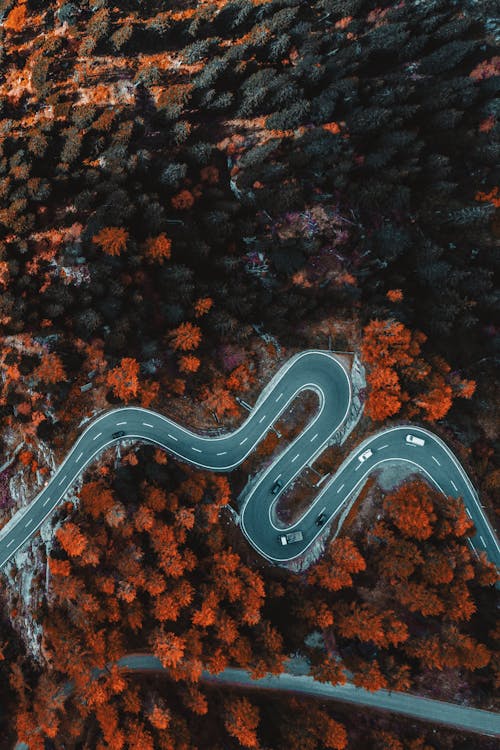
Winding Alpine roads like this one in Switzerland are stunning but demand attention — a good sat nav makes all the difference.
4. Adjust Your Headlights
UK headlights are designed to dip to the left, which means they'll dazzle oncoming drivers on European roads. You must adjust them before you travel.
Options include headlamp beam converter stickers (widely available and cheap), a manual adjustment setting on some vehicles, or a dealer adjustment for Xenon/LED headlamps that can't be converted with stickers.
This is a legal requirement in most European countries and can result in an on-the-spot fine if you're stopped without it.
5. Carry the Right Safety Equipment
Different countries require different items, and the rules vary more than you'd expect. To be safe across most of Western Europe, carry all of the following:
Reflective jackets — One for each person in the vehicle, kept within reach (not in the boot). Required in France, Spain, Italy, Austria, and many other countries.
Warning triangle — In many countries, these devices are compulsory. In Spain, V16 flashing emergency lights will replace warning triangles as the standard legal requirement from 2026, although this rule will apply only to Spanish-registered vehicles.
That said, the lights themselves are relatively inexpensive and are strongly recommended for all drivers, including visitors. Carrying a pair of beacon lights in addition to the standard warning triangle is a sensible precaution.
It is not simply about meeting a legal requirement; it is about improving your visibility and safety if you happen to break down, particularly at night or in poor visibility conditions.
Headlamp beam converters — As mentioned above.
First aid kit — Required in France, Germany, Austria, and several other countries.
GB/UK sticker — If your number plate doesn't include the GB or UK identifier with the Union flag, you need a separate sticker. In Spain, Cyprus, and Malta, a separate sticker is always required regardless of your number plate.
Tip: You can buy pre-made "European driving kits" from Halfords or online that include everything in one pack. Much easier than sourcing items individually.
6. Know the Toll and Vignette Systems
Toll roads are common across Europe, and the systems vary by country. Some use barriers where you pay as you go (France, Spain, Italy), while others require you to buy a vignette sticker in advance (Switzerland, Austria, Czech Republic, Slovenia).
If you're driving through Switzerland, a motorway vignette is mandatory — and it's a flat annual fee, even if you're only passing through for a day. Austria uses a similar system.
In France, toll costs for a motorhome can be significantly higher than for a car, especially if your vehicle is over 3 metres tall or over 3.5 tonnes. The motorway tolls between Calais and the south of France can easily add up to £100+ each way.
Many experienced motorhome travellers use the national roads (routes nationales) instead. They're slower but free, often more scenic, and pass through villages where you can stop for lunch and supplies.
7. Understand Low Emission Zones
An increasing number of European cities now have Low Emission Zones (LEZ) or Clean Air Zones that restrict certain vehicles based on their emissions. The penalties for entering without the correct sticker can be steep.
France uses the Crit'Air system — you need to buy a sticker (around €4) that indicates your vehicle's emission class. It's required in Paris, Lyon, Marseille, and several other cities.
Germany has Umweltzonen in most major cities. You'll need a green Umweltplakette sticker.
Both stickers must be ordered online before you travel, as they're posted to your address. Don't leave this until the week before — allow at least two to three weeks for delivery.
8. Use a Sat Nav with European Maps and Vehicle Profiles
This is where navigation becomes critical. European roads are generally excellent, but they include plenty of low bridges, narrow village streets, weight-restricted roads, and mountain passes that aren't suitable for larger vehicles.
Google Maps is useful for traffic and finding services, but it doesn't let you input your motorhome's dimensions. That means it can route you under a bridge that's too low or down a medieval street that's too narrow.
A dedicated motorhome sat nav lets you enter your vehicle's height, width, length, and weight, then calculates routes that avoid restrictions. When you're driving an unfamiliar vehicle on unfamiliar roads in a country where you can't read every sign, this is genuinely valuable.
Tip: Make sure your sat nav has full European maps loaded before you leave, and download any updates while you're still on Wi-Fi. Signal can be patchy in rural areas — especially in the mountains.
Motorhome Sat Navs with Full European Maps
⭐ 5-star rated across 680+ Trustpilot reviewsEvery CMNAV motorhome sat nav comes pre-loaded with the latest UK & European maps, full vehicle dimension input, and free lifetime premium map updates — so you're covered wherever you travel.
Browse Motorhome Sat NavsNot sure which model? Get in touch — we're always happy to help.
9. Plan Your Overnight Stops
One of the great things about motorhome travel in Europe is the network of aires (France), stellplätze (Germany), and similar overnight stops across the continent. These are designated parking areas for motorhomes, often free or very cheap, with basic facilities like water, waste disposal, and sometimes electric hookup.
France alone has thousands of aires, many in beautiful locations. Apps like Park4Night and Camperstop are widely used by motorhome travellers to find and review overnight stops across Europe.
Remember that wild camping rules vary significantly by country. In France it's generally tolerated in rural areas (though not on beaches or in national parks). In Greece, new restrictions introduced in 2025 have made overnight parking in public places illegal, with fines of up to €300.
Always check the rules for each country you plan to visit — they can change from year to year.
10. Don't Forget the 90-Day Schengen Rule
Since Brexit, UK travellers can stay in the Schengen Area for up to 90 days in any 180-day period without a visa. There are a few important details that trip people up:
It's a rolling 180-day window, not a fixed calendar period. On any given day, you need to look back over the previous 180 days and count how many of those you spent inside the Schengen Area. If it's 90 or more, you can't enter. You can't "reset the clock" by popping out for a day and coming back.
The Schengen Area is not the same as the EU. It includes 29 countries — 25 EU members plus Switzerland, Norway, Iceland, and Liechtenstein. Crucially, Ireland and Cyprus are not in the Schengen Area, so time spent there doesn't count toward your 90 days. However, non-EU countries like Switzerland and Norway do count.
Both your entry and exit days count as full days inside the Schengen Area.
Tip: Use the European Commission's official short-stay calculator to plan and track your trips. It's free and takes the guesswork out of counting days across multiple visits.
For most motorhome holidays, 90 days is more than enough. But if you're planning a longer European tour — or making multiple trips in the same year — you'll need to track your days carefully.
The EU is also rolling out the EES (Entry/Exit System), which electronically registers your fingerprints and photo when you enter and leave the Schengen Area. Once fully live, overstays will be automatically flagged at the border. ETIAS (a pre-travel authorisation similar to the US ESTA) is expected to follow in late 2026, requiring UK travellers to register online before travelling — though it won't change the 90-day allowance itself.
Penalties for overstaying can include fines, deportation, and entry bans of up to five years across the entire Schengen Area — so it's worth getting right.
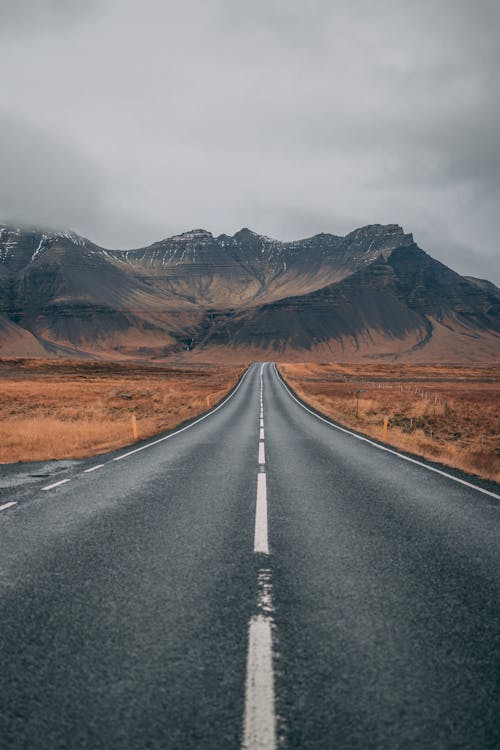
A well-planned European motorhome trip can be one of the most rewarding travel experiences there is.
Final Thoughts
Your first European motorhome trip will almost certainly be the first of many. The freedom of having your accommodation travel with you, combined with Europe's incredible roads, scenery, and culture, makes for an experience that's genuinely hard to beat.
The key is preparation. Get your paperwork sorted early, make sure your licence covers your vehicle, pack the right safety equipment, and invest in a sat nav with European maps and vehicle profiles. Once all of that's in order, you can relax and enjoy the road.
Safe travels — and if you need any help choosing the right sat nav for your European trip, we're always here to help.
Frequently Asked Questions
Do I need a special licence to drive a motorhome in Europe?
If your motorhome weighs up to 3,500kg, a standard UK Category B car licence is accepted across the EU. For motorhomes between 3,500kg and 7,500kg, you need a Category C1 licence. Check the back of your photocard licence or use the GOV.UK driving licence checker to confirm your categories.
What documents do I need to take my motorhome to Europe?
You'll need a valid passport, UK photocard driving licence, V5C registration document (original), valid MOT certificate, vehicle insurance that covers European travel, and a GHIC card for healthcare access. Carrying a Green Card insurance certificate is also recommended.
Do I need a sat nav for driving a motorhome in Europe?
It's strongly recommended. European roads include many low bridges, narrow streets, and weight restrictions that Google Maps won't warn you about. A motorhome sat nav with European maps and vehicle dimension input will route you around these hazards automatically.
How long can I stay in Europe with my motorhome after Brexit?
UK travellers can stay in the Schengen Area for up to 90 days within any rolling 180-day period. This is a combined total across all 29 Schengen countries (including non-EU members like Switzerland and Norway), not per individual country. The 180-day window rolls forward each day — it's not a fixed calendar period. Use the European Commission's free short-stay calculator to track your days across multiple trips.
Do I need emission stickers for driving in Europe?
Yes, in many cities. France requires a Crit'Air sticker for cities like Paris and Lyon. Germany requires an Umweltplakette for most major cities. Both must be ordered online in advance and posted to your UK address — allow two to three weeks for delivery.
Is it hard to drive on the right in a motorhome?
Most drivers adjust within 20-30 minutes. The trickiest moments are roundabouts and pulling out of car parks or petrol stations after a break. Take it easy on your first day and stick to quieter roads until you're comfortable.
Leave a comment